CIRCLE
Electric car for smart urban mobility.
CIRCLE
Electric car for smart urban mobility.
CIRCLE
Electric car for smart urban mobility.
Client:
LOTUS
Sector:
Mobility
Services:
Needs research
Future scenarios
User experience
Transportation design
Client:
LOTUS
Sector:
Mobility
Services:
Needs research
Future scenarios
User experience
Transportation design
“Circle” a new mode of transportation.
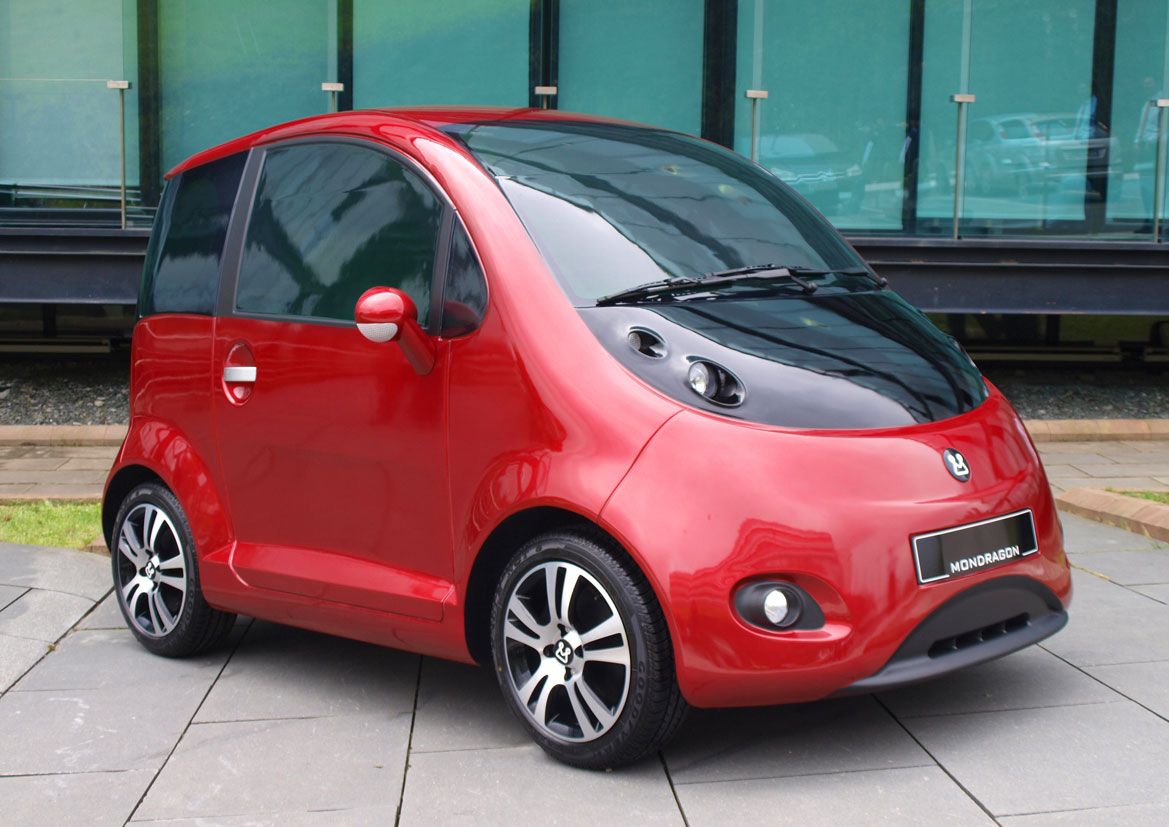
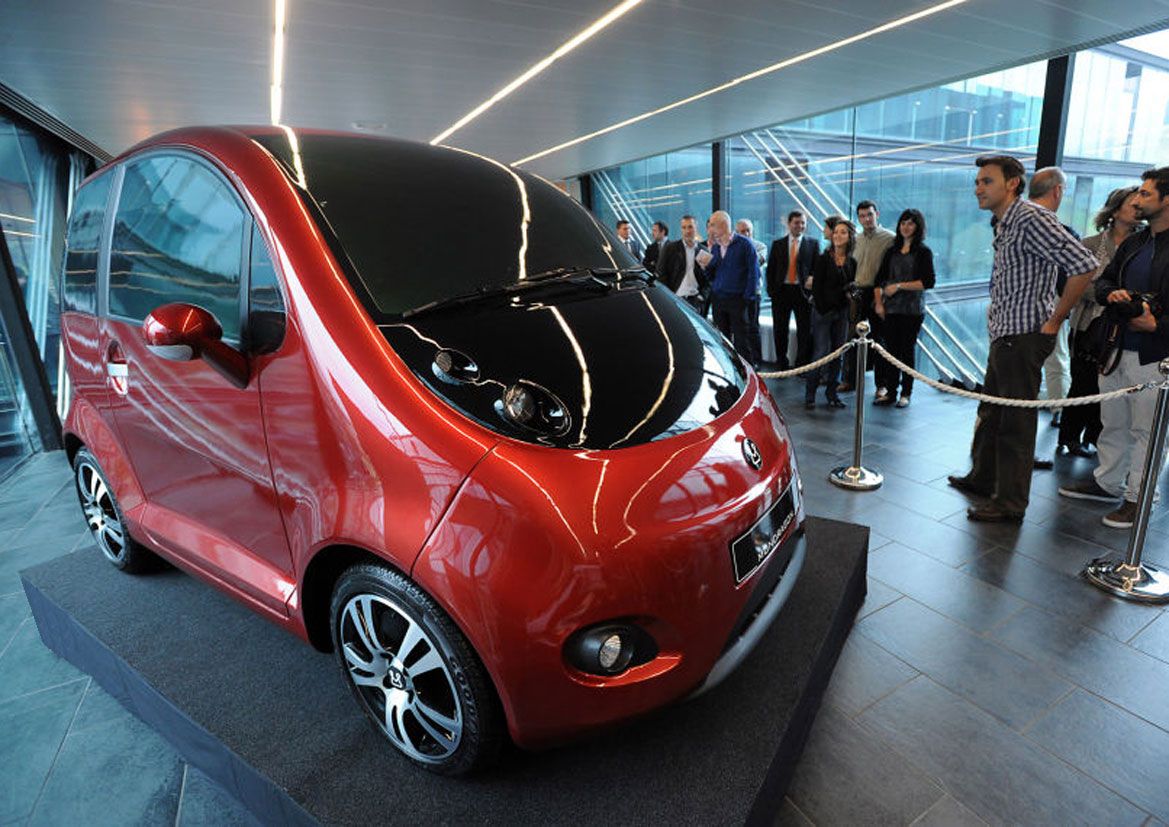
In collaboration with Lotus Engineering, this urban electric car concept was created as a forward-looking response to the future of sustainable mobility. Conceived for a modern, urban, and young female driver, the project highlights Mondragon Automoción’s capability to develop integral automotive solutions. With a 45 kW engine, 0–50 km/h acceleration in just 5 seconds, and an 80 km range, it combined innovation, safety, and functionality. This disruptive concept, with its bold red impact and organic minimalism, remains strikingly current years after its creation.
“Circle” a new mode of transportation.
In collaboration with Lotus Engineering, this urban electric car concept was created as a forward-looking response to the future of sustainable mobility. Conceived for a modern, urban, and young female driver, the project highlights Mondragon Automoción’s capability to develop integral automotive solutions. With a 45 kW engine, 0–50 km/h acceleration in just 5 seconds, and an 80 km range, it combined innovation, safety, and functionality. This disruptive concept, with its bold red impact and organic minimalism, remains strikingly current years after its creation.
Exterior Design
Bold, fluid, timeless.
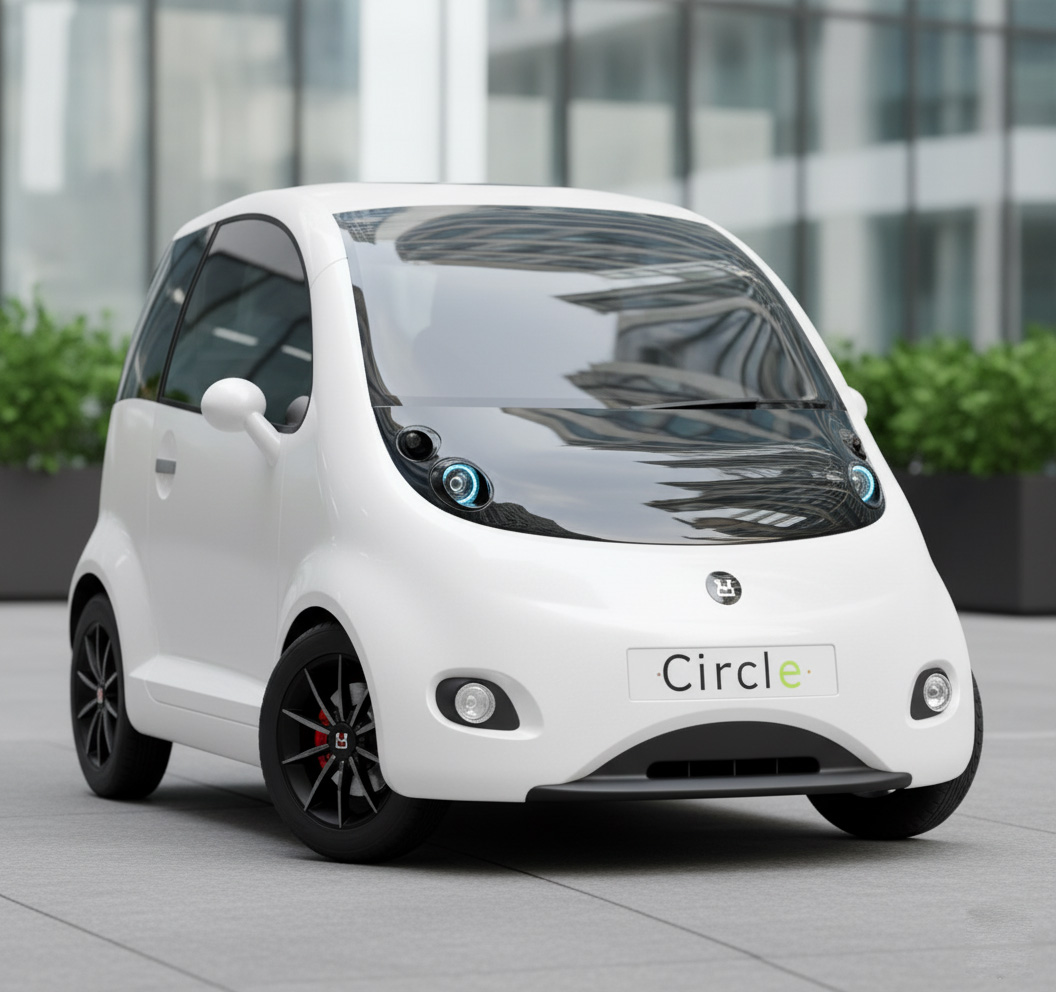
The exterior of the concept car balances minimalism with dynamism. Organic forms and flowing surfaces were emphasized to create a sculptural silhouette that is both approachable and forward-thinking. The clean white exterior amplifies its character, projecting freshness while ensuring urban visibility. Designed to resonate with a young and modern audience, its fluid proportions and expressive stance deliver an aesthetic that remains contemporary and relevant even today.
Exterior Design
Bold, fluid, timeless.
The exterior of the concept car balances minimalism with dynamism. Organic forms and flowing surfaces were emphasized to create a sculptural silhouette that is both approachable and forward-thinking. The clean white exterior amplifies its character, projecting freshness while ensuring urban visibility. Designed to resonate with a young and modern audience, its fluid proportions and expressive stance deliver an aesthetic that remains contemporary and relevant even today.
Exterior Design
Bold, fluid, timeless.
The exterior of the concept car balances minimalism with dynamism. Organic forms and flowing surfaces were emphasized to create a sculptural silhouette that is both approachable and forward-thinking. The clean white exterior amplifies its character, projecting freshness while ensuring urban visibility. Designed to resonate with a young and modern audience, its fluid proportions and expressive stance deliver an aesthetic that remains contemporary and relevant even today.
Interior Design
Comfort, safety, and utility.
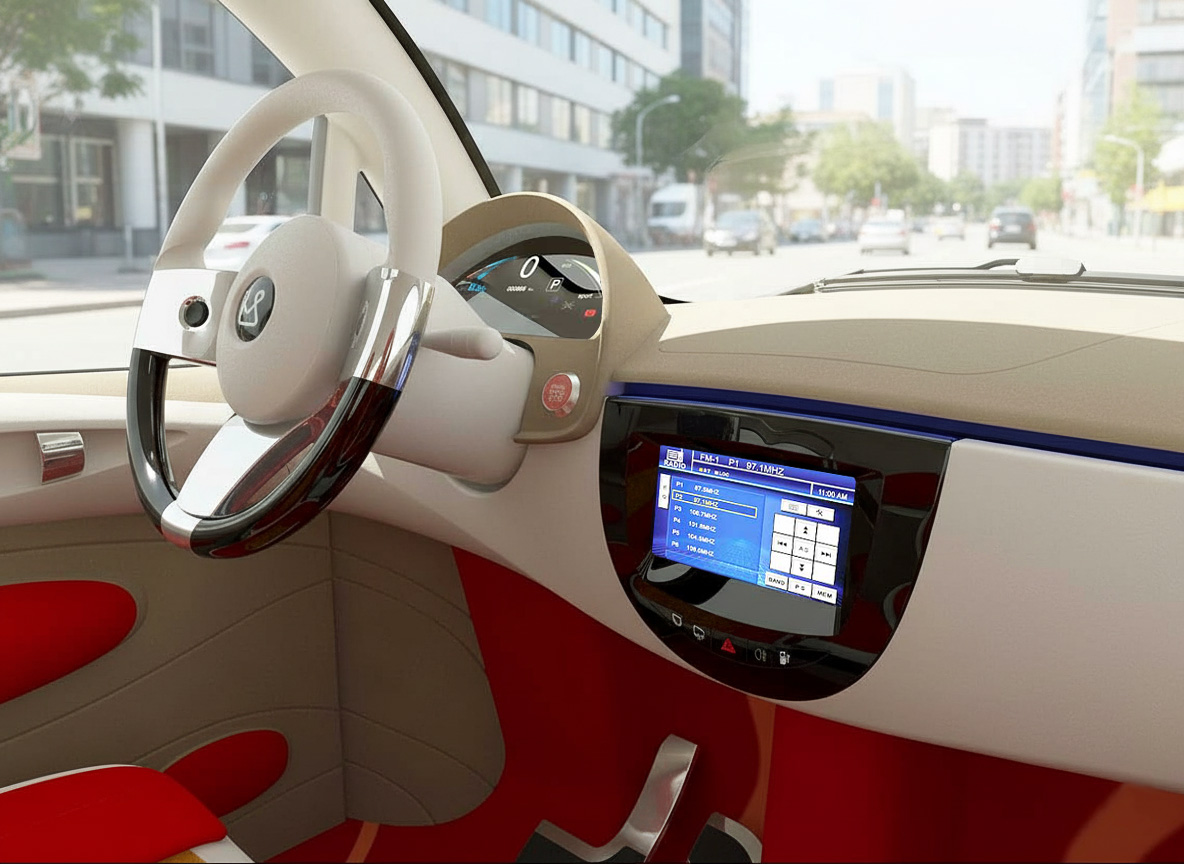
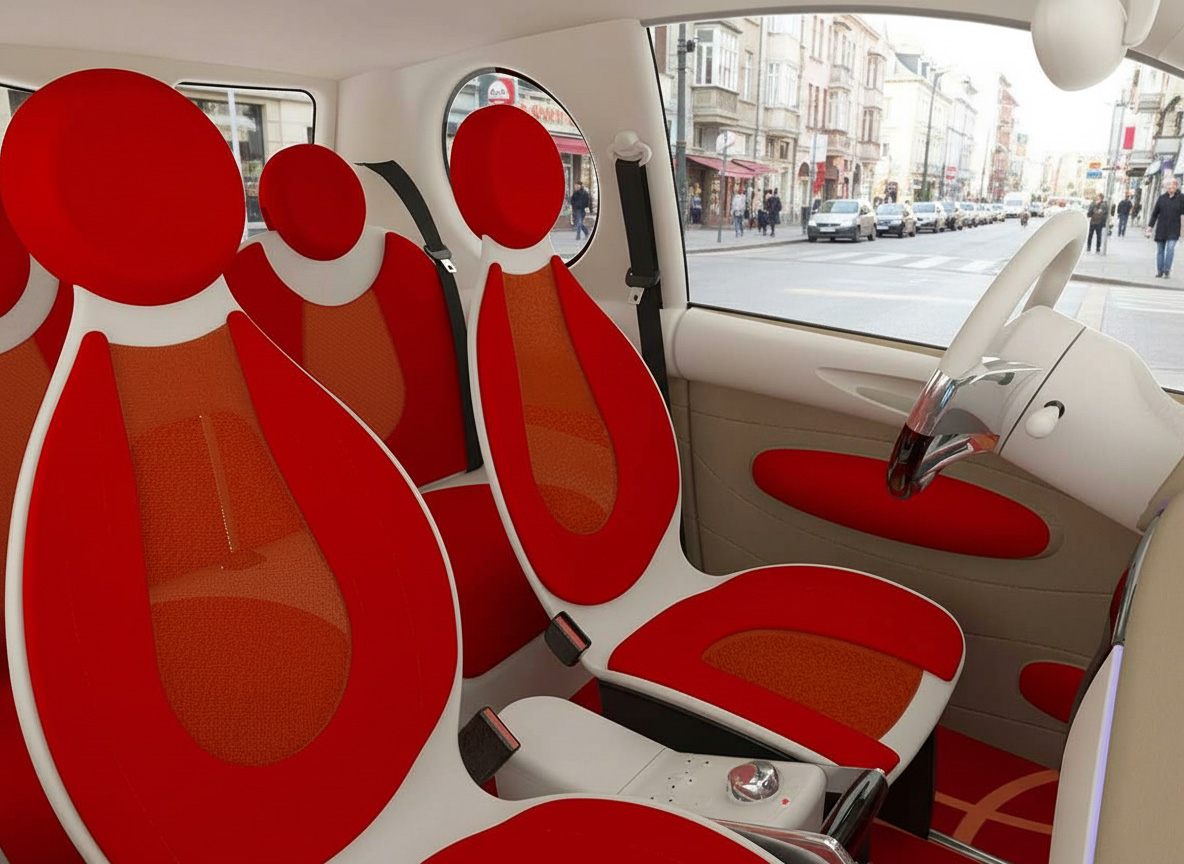
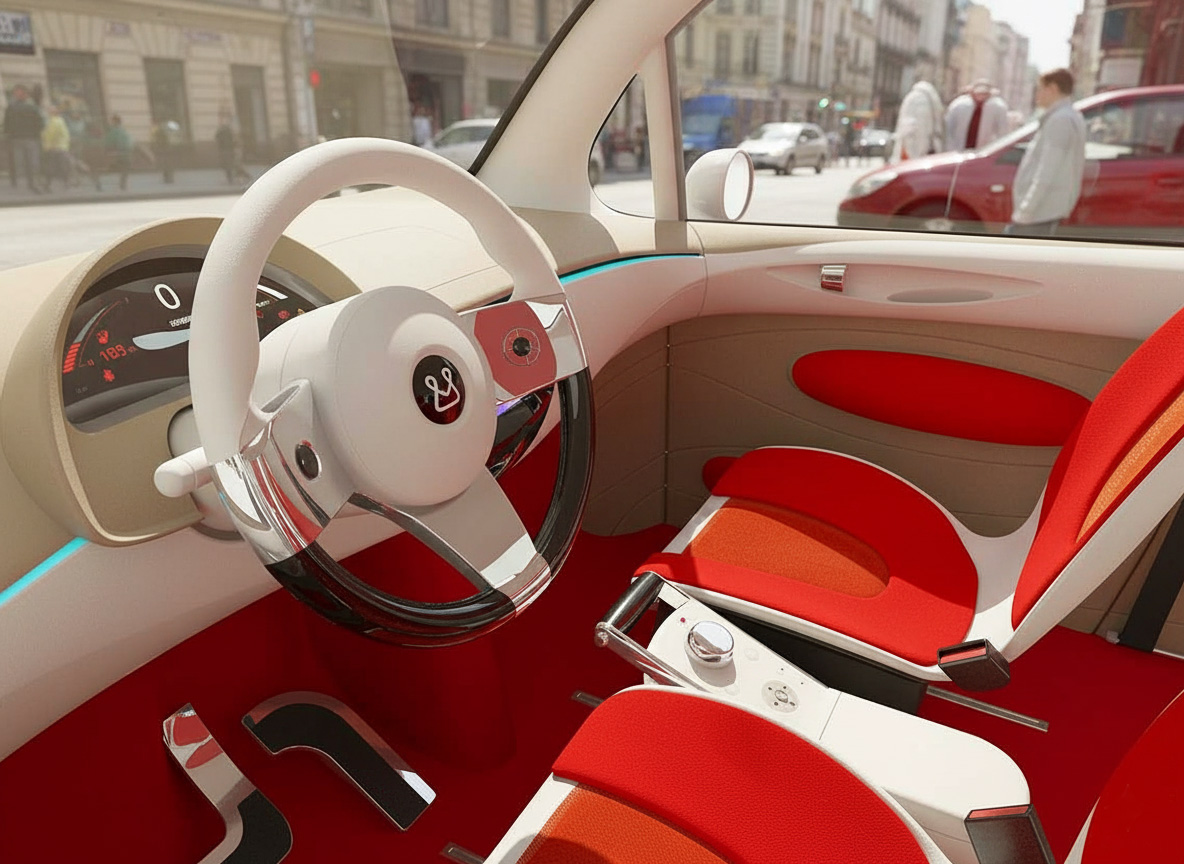
The interior was developed around safety and everyday functionality. With capacity for four passengers, the cabin integrates nine airbags as standard and a reinforced front structure for enhanced protection. Practicality is ensured through both rear luggage space and an additional front compartment, an asset for urban living. The interior environment reflects simplicity and user-friendliness, combining ergonomic seating and intuitive layouts with a clean, modern design language tailored to daily mobility needs.
Interior Design
Comfort, safety, and utility.
The interior was developed around safety and everyday functionality. With capacity for four passengers, the cabin integrates nine airbags as standard and a reinforced front structure for enhanced protection. Practicality is ensured through both rear luggage space and an additional front compartment, an asset for urban living. The interior environment reflects simplicity and user-friendliness, combining ergonomic seating and intuitive layouts with a clean, modern design language tailored to daily mobility needs.
Interior Design
Comfort, safety, and utility.
The interior was developed around safety and everyday functionality. With capacity for four passengers, the cabin integrates nine airbags as standard and a reinforced front structure for enhanced protection. Practicality is ensured through both rear luggage space and an additional front compartment, an asset for urban living. The interior environment reflects simplicity and user-friendliness, combining ergonomic seating and intuitive layouts with a clean, modern design language tailored to daily mobility needs.
Design Process
From sketches to prototyping.
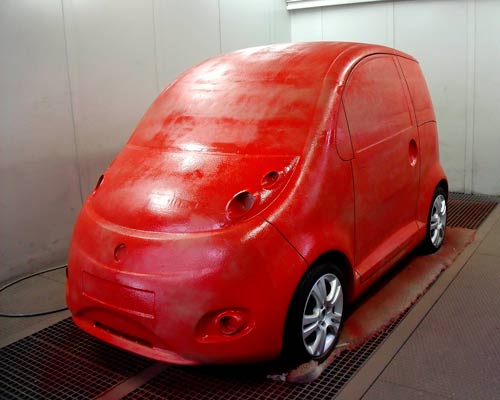
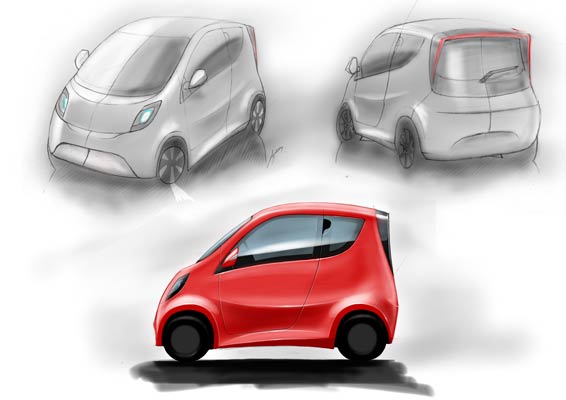
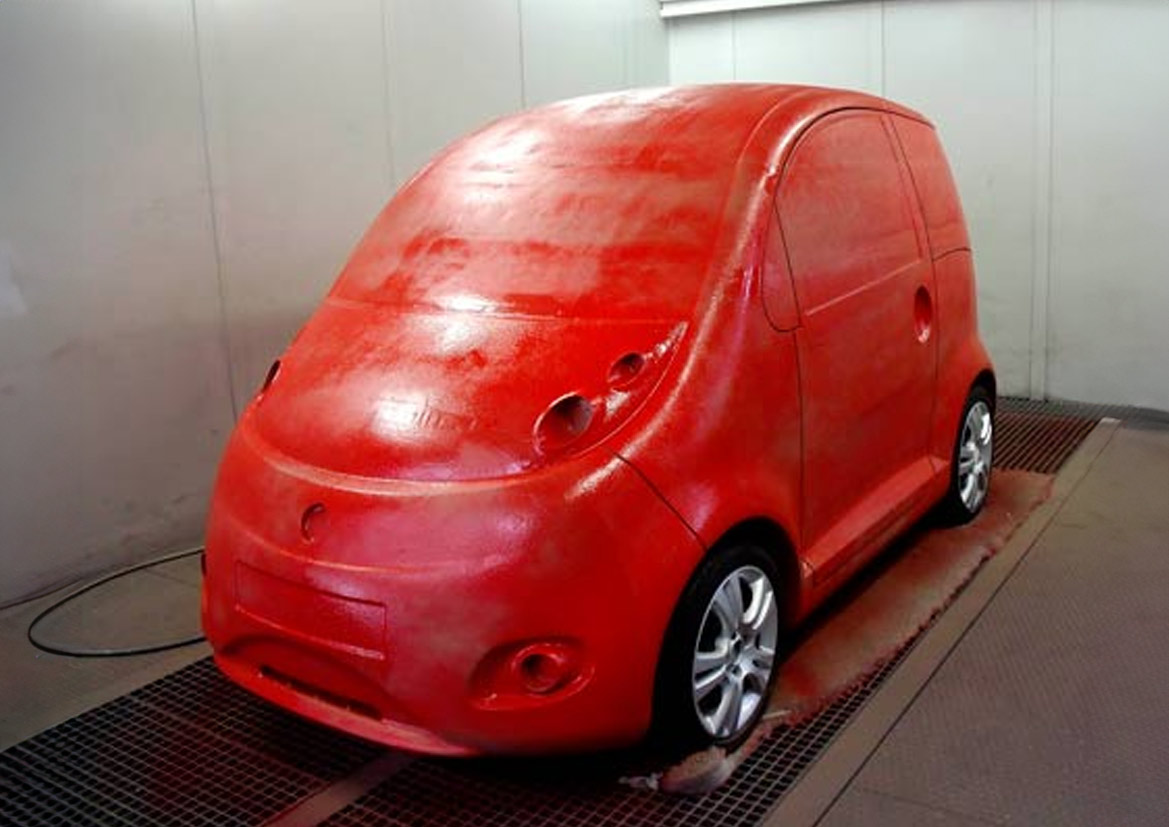
The design process followed a comprehensive path from early sketch ideation to 1:1 prototyping. Initial hand-drawn concepts explored proportions, form language, and user-centered scenarios. These were further refined through physical and digital models to validate design intent, ergonomics, and usability. The culmination was a full-scale prototype that allowed teams to test spatial perception, material finishes, and technical integration. This hands-on, iterative approach ensured a robust and innovative result, combining creativity with engineering precision.
From sketches to prototyping
rom sketches to full-scale prototyping.
The design process followed a comprehensive path from early sketch ideation to 1:1 prototyping. Initial hand-drawn concepts explored proportions, form language, and user-centered scenarios. These were further refined through physical and digital models to validate design intent, ergonomics, and usability. The culmination was a full-scale prototype that allowed teams to test spatial perception, material finishes, and technical integration. This hands-on, iterative approach ensured a robust and innovative result, combining creativity with engineering precision.
Design Process
From sketches to prototyping.
The design process followed a comprehensive path from early sketch ideation to 1:1 prototyping. Initial hand-drawn concepts explored proportions, form language, and user-centered scenarios. These were further refined through physical and digital models to validate design intent, ergonomics, and usability. The culmination was a full-scale prototype that allowed teams to test spatial perception, material finishes, and technical integration. This hands-on, iterative approach ensured a robust and innovative result, combining creativity with engineering precision.