PANDA SKYTRAIN
A special journey.
PANDA SKYTRAIN
A special journey.
PANDA SKYTRAIN
A special journey.
Client:
CRRC
Sector:
Mobility
Services:
Needs research
User experience
Transportation design
Client:
CRRC
Sector:
Mobility
Services:
Needs research
User experience
Transportation design
China’s first suspension “sky train”, designed and tested in Chengdu, represents a breakthrough in sustainable and accessible urban mobility.
This two-car train, with capacity for over 200 passengers, reaches speeds of up to 60 km/h and operates entirely on battery power, recharging at station stops, making it the world’s first battery-powered hanging railway. Developed by CRRC, this system offers a cost-efficient and flexible alternative to traditional metros, capable of handling steeper gradients and tighter curves, making it ideal for smaller cities and scenic destinations. Its concept merges technical innovation with cultural identity, symbolizing a harmonious balance between modern technology and the natural world.
Charming Design
Friendly innovation through emotional design.
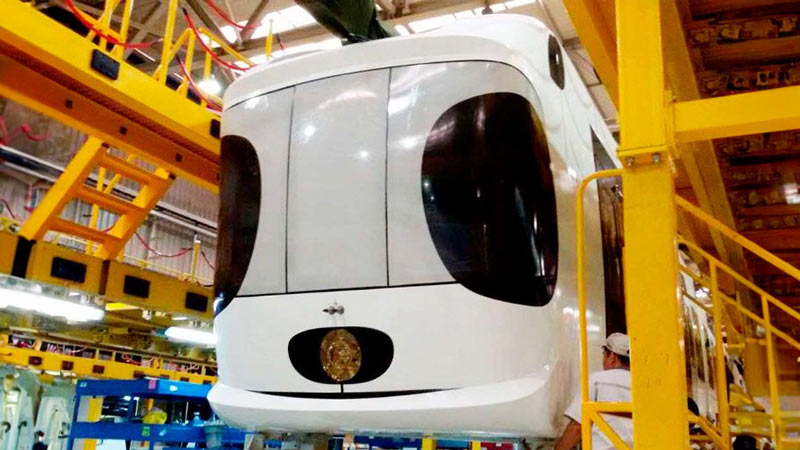
The design of the train draws inspiration from China’s most beloved animal, the giant panda, native to the Sichuan region. By integrating the panda’s recognizable shapes and gentle expressions into the exterior form and color scheme, the vehicle transcends its functional purpose to become an emotional icon of mobility. This friendly aesthetic not only pays tribute to the region’s identity but also plays a subtle psychological role: it turns curiosity into comfort, helping passengers overcome potential fears of suspended travel.



Global impact
Capturing the world’s attention.
The Chengdu “panda train” quickly transcendedto become a global media phenomenon. It was featured in dozens of international newspapers, online platforms, and television segments, praised not only for its technical innovation but also for its charming and emotional design. Videos of the train in motion went viral across social networks, captivating millions of viewers who admired its friendly appearance. Beyond public fascination, the project also drew the attention of design and innovation communities worldwide, with specialized publications such as Experimenta highlighting it as an example of how engineering, culture, and emotional design can come together to redefine urban mobility.
Global Impact
Capturing the world’s attention.
The Chengdu “panda train” quickly transcendedto become a global media phenomenon. It was featured in dozens of international newspapers, online platforms, and television segments, praised not only for its technical innovation but also for its charming and emotional design. Videos of the train in motion went viral across social networks, captivating millions of viewers who admired its friendly appearance. Beyond public fascination, the project also drew the attention of design and innovation communities worldwide, with specialized publications such as Experimenta highlighting it as an example of how engineering, culture, and emotional design can come together to redefine urban mobility.